Showing posts with label community. Show all posts
Showing posts with label community. Show all posts
Friday, August 19, 2011
Layer 479 . . . Towns, Cities, Communities, Big Lunches, Urban Riots, Gandhi, Hazare, Tim Smit, Heligan, Totnes and Naomi Klein
.
There's been an interesting series of programmes on BBC TV this summer on the subject of towns. As something of an amateur geographer it was compulsory viewing for me, in spite of the irritating presenter - his false bonhomie & chumminess, and his ridiculous shortie double breasted macintosh that he'd insisted on wearing throughout the series and had about nine pockets and two epaulettes too many.
http://www.bbc.co.uk/iplayer/episode/b013n5gl/TOWN_with_Nicholas_Crane_Totnes/
Previous programmes have focused on towns such as Ludlow and Scarborough - last night's was on Totnes, which is becoming well known as the first of the 'transition towns' in Britain. The key idea in these programmes is that it's possible to live more on a human scale in a town, which is less of an anthill than a city, but has more to offer than a village.
http://www.transitiontowntotnes.org/content/transition-town-totnes-newsletter-54-may-2011
This final programme, however, floated the idea that people need to rediscover a sense of community within cities, or within particular communities within cities. A typical London borough, therefore, such as Hackney or Islington or Tottenham, can have its own sense of community, and within those boroughs there are specific areas that can generate their own sense of community - Stoke Newington, Clapton, Dalston, Canonbury, Barnsbury, Angel, etc.
We can even take it down to street level - and I've written in the past about brilliant street parties that have taken place in my own locality - in response to the brilliant Tim Smit's idea of a "Big Lunch". http://oxzen.blogspot.com/2010/07/layer-333-radio-4-reasons-to-be.html
In a typical street of Victorian terraced houses there as so many people and so many families it's possible to generate an amazing sense of community if people live there long enough. There are many wonderful streets where people love living and do indeed stick around for many years.
Tim Smit was also featured on TV this week in a superb documentary - beautifully filmed and edited - about the Lost Gardens of Heligan. It was Tim who discovered the abandoned estate in Cornwall, and who brought it back to life - which he subsequently wrote a book about. It was also Mr Smit who raised the money for and built the Eden Project. He's quite a guy.
http://howtomakeadifference.net/2010/06/14/tim-smit/
http://www.edenproject.com/media/big-lunch-3d-art-pr.php
http://www.guardian.co.uk/environment/2009/apr/06/food-big-lunch-production
http://www.independent.co.uk/opinion/commentators/tim-smit-breaking-bread-together-will-break-down-community-barriers-1658946.html
................................................................................
The last time I went to see Naomi Klein speak at a public meeting was a few months ago in Totnes. She was there to study the Transition Town concept. Unfortunately the meeting was spoiled by a few typical locals who insisted on turning the meeting into something resembling a hall full of small discussion groups so that they could listen to themselves talking rather than pay attention to what the sublime Ms Klein had to say. Ordinarily I wouldn't have cared particularly - and if the 'workshops' and the 'brainstorming' had turned out to be dull then I'd gladly have gone down to the nearest pub and left them to it. Unfortunately, when the guest speaker lives in Canada and rarely gets to England, let alone Totnes, then it just seemed like a missed opportunity. What a pity there were no civic leaders present who had the presence of mind to stand up and say to the gathering that they really could listen to one another at any old time, whereas Naomi Klein was in town just for the day . . .
Naomi wrote a brilliant piece this week on the subject of England's urban riots:
Looting with the lights on
We keep hearing England's riots weren't political – but looters know that their elites have been committing daylight robbery
http://www.guardian.co.uk/commentisfree/2011/aug/17/looing-with-lights-off
Argentina's mass looting was called el saqueo – the sacking. That was politically significant because it was the very same word used to describe what that country's elites had done by selling off the country's national assets in flagrantly corrupt privatisation deals, hiding their money offshore, then passing on the bill to the people with a brutal austerity package. Argentines understood that the saqueo of the shopping centres would not have happened without the bigger saqueo of the country, and that the real gangsters were the ones in charge.
England is not Latin America, and its riots are not political, or so we keep hearing. They are just about lawless kids taking advantage of a situation to take what isn't theirs. And British society, Cameron tells us, abhors that kind of behaviour.
This is said in all seriousness. As if the massive bank bailouts never happened, followed by the defiant record bonuses. Followed by the emergency G8 and G20 meetings, when the leaders decided, collectively, not to do anything to punish the bankers for any of this, nor to do anything serious to prevent a similar crisis from happening again. Instead they would all go home to their respective countries and force sacrifices on the most vulnerable. They would do this by firing public sector workers, scapegoating teachers, closing libraries, upping tuition fees, rolling back union contracts, creating rush privatisations of public assets and decreasing pensions – mix the cocktail for where you live. And who is on television lecturing about the need to give up these "entitlements"? The bankers and hedge-fund managers, of course.
This is the global saqueo, a time of great taking. Fuelled by a pathological sense of entitlement, this looting has all been done with the lights on, as if there was nothing at all to hide. There are some nagging fears, however. In early July, the Wall Street Journal, citing a new poll, reported that 94% of millionaires were afraid of "violence in the streets". This, it turns out, was a reasonable fear.
Of course London's riots weren't a political protest. But the people committing night-time robbery sure as hell know that their elites have been committing daytime robbery. Saqueos are contagious. The Tories are right when they say the rioting is not about the cuts. But it has a great deal to do with what those cuts represent: being cut off. Locked away in a ballooning underclass with the few escape routes previously offered – a union job, a good affordable education – being rapidly sealed off. The cuts are a message. They are saying to whole sectors of society: you are stuck where you are, much like the migrants and refugees we turn away at our increasingly fortressed borders.
Cameron's response to the riots is to make this locking-out literal: evictions from public housing, threats to cut off communication tools and outrageous jail terms (five months to a woman for receiving a stolen pair of shorts). The message is once again being sent: disappear, and do it quietly.
At last year's G20 "austerity summit" in Toronto, the protests turned into riots and multiple cop cars burned. It was nothing by London 2011 standards, but it was still shocking to us Canadians. The big controversy then was that the government had spent $675m on summit "security" (yet they still couldn't seem to put out those fires). At the time, many of us pointed out that the pricey new arsenal that the police had acquired – water cannons, sound cannons, teargas and rubber bullets – wasn't just meant for the protesters in the streets. Its long-term use would be to discipline the poor, who in the new era of austerity would have dangerously little to lose.
This is what Cameron got wrong: you can't cut police budgets at the same time as you cut everything else. Because when you rob people of what little they have, in order to protect the interests of those who have more than anyone deserves, you should expect resistance – whether organised protests or spontaneous looting. And that's not politics. It's physics.
.................................................
The correct response to the political situation, as I've said so many times, is peaceful, non-violent protest and demonstration - walk like an Egyptian. Talk like Tahrir, or Tiananmen.
http://en.wikipedia.org/wiki/Tahrir_Square
http://en.wikipedia.org/wiki/Egyptian_Revolution_of_2011
http://en.wikipedia.org/wiki/Tiananmen_Square_protests_of_1989
Gandhi was the first to use non-violent mass protest as a means of making political demands. There's a new movement happening in India based on Gandhi's ideas and example. And a man called Anna.
Indian corruption: Gandhi's mantle
Anna Hazare's anti-corruption movement is posing an increasingly serious challenge to the Indian government
http://www.guardian.co.uk/commentisfree/2011/aug/17/anna-hazare-gandhi-india-corruption
Editorial
The practical and sometimes dirty business of power-seeking and deal-making has in the past been countered in Indian politics by periodic impulses to transform society root and branch. This dualism was famously embodied in the divide between Nehru and Gandhi, partners but also rivals in the Indian independence movement.
The two men had profoundly different ideas on the direction in which India ought to go, Nehru seeing a future India as a great industrial and military power, while Gandhi wanted a society which would keep the worst aspects of modernity at bay while transcending caste, class and religious differences.
Anna Hazare, the 74-year-old former soldier whose anti-corruption movement is posing an increasingly serious challenge to the Indian government, has certainly borrowed both style and technique from the Mahatma. He wears plain white clothes, if not the actual homespun on which Gandhi insisted. Like Gandhi, he fasts. Like Gandhi, he goes to prison – and sometimes refuses to come out. Like Gandhi, he has a model village, in his case in his home state of Maharashtra. Like Gandhi, he is against tobacco, alcohol and other drugs. Like Gandhi he has mobilised large numbers of Indians, many thousands of whom have been demonstrating in New Delhi and other cities after Manmohan Singh's government made the mistake of arresting him two days ago. Anger at corruption, of both the grand and the petty kind, has never been so intense.
The basic issue is simple. Mr Hazare and his followers want a powerful anti-corruption agency established, something that various governments had promised in the past. The prime minister pushed legislation to create such an agency, but without giving it powers to investigate the senior judiciary and the prime minister's office, or to pursue the lower- level officials who make life an expensive hell for Indians seeking driving licences, passports and other documents. Mr Hazare will not accept this, while Mr Singh says democracy is being subverted.
Mr Hazare does not have, or aspire to, anything like Gandhi's stature. He does not confront, as Gandhi did, his followers' complicity in social evils, an aspect of his career underlined by the subtitle – His Struggle With India – of a recent book on Gandhi. But Mr Hazare has found an issue – and is exerting a leverage which on balance must be good for India.
http://www.guardian.co.uk/world/anna-hazare
.


Wednesday, February 9, 2011
Layer 439 . . . Multiculturalism, Segregation, Brotherhood, Religion, Egypt and Revolution
.
The radio's telling me that the subject of 'multiculturalism' will be discussed on "The Moral Maze" this evening. So this is a moral issue, is it?
It's only immoral in the sense that David Cameron's attack on 'multiculturalism' is immoral - designed simply to win friends and influence people on the far right of the political spectrum.
The alternative to multiculturalism is monoculturalism. Personally, I don't want to live in a monoculture. I don't want to live in a middle class ghetto or a working class ghetto. I don't want to live in a gated community - one that's either physically or metaphorically gated.
I enjoy living where community life is enriched by a hundred different nationalities, cultures and cuisines. I enjoy the fact that people of such different origins, backgrounds and ways of life manage to live peacefully and respectfully alongside and amongst one another. People in my community recognise that we have far more in common as decent human beings than we have things which separate us. There is far more that unites us than divides us.
Just as I don't want to live in a whites-only neighbourhood, I wouldn't want to live in a predominantly black or brown neighbourhood. The segregation in some of our towns and some parts of our cities is appalling. Segregation is driven by both poverty and by fear. We need to eliminate both.
Prejudice is driven by poverty, fear and ignorance. Cameron is doing nothing to decrease these evils, and doing everything to increase them.
In my ideal community there would be no segregated schools and no separation of children by fees, religion or academic ability. Blair's desire to create more Christians-only schools also led to the creation of schools run by and for Muslims. How can this be helpful - let alone part of what people call 'multiculturalism'? This is a nonsense.
I'm sick of Christians regarding themselves as superior beings, and I'm sick of Muslims regarding themselves as superior beings. I'm sick of any religion than separates people and sets them against one another. I'm sick of anyone who justifies prejudice and division by claiming to be doing 'God's will'.
I'm sick of atheists who can't recognise that at least some of those who follow a religion are simply trying to make a connection with something spiritual. I'm sick of scientific materialism. I'm sick of radical Muslims who think they are going to create a countrywide or worldwide Sharia state.
.............................................
I don't often reproduce in full an article from the Guardian, but this one deserves passing on in its entirity.
This is Egypt's revolution, not ourshttp://www.guardian.co.uk/commentisfree/2011/feb/08/egypt-revolution-muslim-brotherhood-democracy
All we in the Muslim Brotherhood want is for President Mubarak to go and real democracy to prevail
by Mohammad Mursi
The Guardian, Tuesday 8 February 2011
As the past fortnight has underlined, Egypt occupies a leading role in one of the most vital and volatile regions in the world. However, this great country has been ruled by an autocratic regime for more than 30 years, and left riddled with corruption, poverty, inequality and insecurity.
With millions condemned to live in squalor, astronomical unemployment rates, political suppression and absence of basic freedoms, the Egyptian people have been seething with anger, frustration and discontent for years. Thousands of political dissidents have been dragged before military courts and sentenced to years in prison despite civil courts ordering their release.
Elections were rigged on an unimaginable scale – forcing Egyptians, and especially the young, into a state of utter desperation.
The Muslim Brotherhood, which was established in 1928, is at the heart of Egyptian society, and therefore has come in for much of the strife and difficulty that faced the entire country as a result of the regime's policies and practices. As a political movement with wide appeal and support, it was constantly targeted by some of the most brutal government measures. It was banned from public life despite the fact that most people considered it to be the main opposition organisation.
Despite numerous attempts to tarnish the Muslim Brotherhood's reputation inside Egypt and beyond, the tenets of our movement could not be clearer or more unequivocal. We aim to remove all forms of injustice, tyranny, autocracy and dictatorship, and we call for the implementation of a democratic multiparty all-inclusive political system that excludes no one.
Accusations that we aim to dominate or hegemonise the political system could not be further from the truth, and all our literature and public statements emphasise that we see ourselves as part of the fabric of Egyptian social and political life. So we deserve an equal opportunity to work for the prosperity of Egypt through promoting our message and solutions, just like all other groupings.
For years we have been warning the regime that matters were coming to a head and that radical change was inevitable if we were to achieve internal peace, security and stability. The revolution sweeping Egypt is a result of the eruption of anger and frustration built up over many years of abject failure and widespread corruption. Uniquely this moment is one that no political party can claim to own, to lead or to have triggered. Rather, it was a natural reaction by the population to the miserable state of its country.
Egypt's youth have been the heroes of the events. The maturity, shrewdness, resilience, intelligence and patriotism exemplified by the young people in Cairo's Tahrir Square and in dozens of other Egyptian cities has been refreshing and uplifting for the entire country. It was just what a deeply despondent population needed, and has it breathed life into a society all but resigned to exist under a corrupt dictator who would then hand over to his son.
The Muslim Brotherhood has been with those protesters from the very start, and continues to share their demands that a peaceful transfer of power is carried out immediately, and freedom in all senses is realised throughout Egypt. There can be no question that genuine democracy must prevail; and while the Muslim Brotherhood is unequivocal regarding its basis in Islamic thought, it rejects any attempt to enforce any ideological line upon the Egyptian people.
Over the past few days, we have been working with the youth leaders and our partners in the opposition to bring this revolution to its only satisfactory outcome. We have decided to engage in a dialogue between political parties and the appointed vice president and other officials to explore directly their commitment to implement the people's demands and willingness to respond to them positively. The outcome so far is far from sufficient. Meanwhile, the unprecedented nationwide protests continue – until the people's goals are achieved.
The Muslim Brotherhood along with the whole nation is unrelenting in its demand that President Hosni Mubarak stands down immediately. We want the officials responsible for the bloodshed that marred the peaceful protests to be brought to trial; the parliamentary and local councils formed by rigged elections to be disbanded; the immediate cessation of the emergency law; and the formation of an interim national government until free fair and transparent elections are held under full legal and judicial supervision.
The Muslim Brotherhood will never compromise on its demands for the complete separation and independence of authorities, the freedom to form political parties and community groups, and the freedom of the press and media.
Should these be implemented – and we are determined they will – Egypt will be able to assume its place as a positive regional player and influential state that can interact with the international community on the basis of mutual respect and shared interests. The world cannot do without an Egypt that is at peace with itself and capable of playing its full role in the world.
.
Friday, August 27, 2010
Layer 345 . . . Devo, Zapatistas, Naomi Klein, Marcos, Joumana Haddad, More Football and No More Forgetting
.
Devo
I'm not sure why I started looking into Devo's musical history - I think it was because of a half-heard snippet on the radio recently. They're a weird bunch, Devo. Can't argue too much with their philosophy though. The very idea of bands having something coherent to say about life, the universe and everything, some sort of challenging philosophy, is pretty unusual these days, apart from odd exception such as Manu Chao.
Devo reckon that most people live in a state of constant anxiety, possibly even fear. This is part of the reason why most people are unable to think logically, critically, coherently and abstractly. Another reason is due to not having any education or training that would help them develop critical, abstract and coherent thinking. But where are the political parties that have identified and highlighted this fact? say Devo.
http://en.wikipedia.org/wiki/Devo
.....................................................
Zapatista
Glancing through some old Guardian magazines this morning I noticed an article by Naomi Klein, written in 2001, which focused on the Zapatista movement in Mexico – it’s history, philosophy, membership and leadership. This seems synchronous with recent Oxzen musings about Che, Cuba, Chavez, and Oliver Stone’s movie about left radicalism in South America – ‘South of the Border’.
http://www.guardian.co.uk/books/2001/mar/03/politics
http://en.wikipedia.org/wiki/Zapatista_Army_of_National_Liberation
http://en.wikipedia.org/wiki/South_of_the_Border_%28film%29
http://www.guardian.co.uk/books/2001/mar/03/extract
http://www.youtube.com/user/xlinksxaussenx
……………………………………..
Here’s another piece about a remarkable non-conformist – a woman who’s clearly bursting with spiritual intelligence, courage, and a determination fight for what’s right and to go her own way:
Joumana Haddad: 'I live in a country that hates me'
http://www.guardian.co.uk/theguardian/2010/aug/21/joumana-haddad-interview
……………………………………………
Football Ownership
I'd meant to include this reference in a previous Layer on the state of football in Britain:
http://www.guardian.co.uk/society/2010/aug/18/football-social-value-report-supporter-owned
.
Devo
"When up or down, light and dark, progression and regression are viewed not as opposites, but as contraries, different manifestations of the same basic energies, then devolution becomes not only possible, but viable."
The name "Devo" comes "from their concept of 'de-evolution' - the idea that instead of evolving, mankind has actually regressed, as evidenced by the dysfunction and herd mentality of American society. - Wikipedia
I'm not sure why I started looking into Devo's musical history - I think it was because of a half-heard snippet on the radio recently. They're a weird bunch, Devo. Can't argue too much with their philosophy though. The very idea of bands having something coherent to say about life, the universe and everything, some sort of challenging philosophy, is pretty unusual these days, apart from odd exception such as Manu Chao.
Devo reckon that most people live in a state of constant anxiety, possibly even fear. This is part of the reason why most people are unable to think logically, critically, coherently and abstractly. Another reason is due to not having any education or training that would help them develop critical, abstract and coherent thinking. But where are the political parties that have identified and highlighted this fact? say Devo.
http://en.wikipedia.org/wiki/Devo
.....................................................
Zapatista
Glancing through some old Guardian magazines this morning I noticed an article by Naomi Klein, written in 2001, which focused on the Zapatista movement in Mexico – it’s history, philosophy, membership and leadership. This seems synchronous with recent Oxzen musings about Che, Cuba, Chavez, and Oliver Stone’s movie about left radicalism in South America – ‘South of the Border’.
http://www.guardian.co.uk/books/2001/mar/03/politics
http://en.wikipedia.org/wiki/Zapatista_Army_of_National_Liberation
http://en.wikipedia.org/wiki/South_of_the_Border_%28film%29
The unknown icon
Next week, rebels will march on Mexico City demanding rights for the country's indigenous people. But they will not fire a single shot, for this is a new kind of revolution. Naomi Klein describes the appeal of the Zapatistas and their 'voice' Subcomandante Marcos.
The caravan, nicknamed the "Zapatour" by the Mexican press, is being led by the council of 24 Zapatista commanders, in full uniform and masks (though no weapons), including Subcomandante Marcos himself.
Perhaps only a man who never takes off his mask, who hides his real name, could lead this caravan of renegades, rebels, loners and anarchists on this two-week trek. These are people who have learned to steer clear of charismatic leaders with one-size-fits-all ideologies. These aren't party loyalists; these are members of groups that pride themselves on their autonomy and lack of hierarchy. Marcos - with his black wool mask, two eyes and pipe - seems to be an anti-leader tailor-made for this suspicious, critical lot. Not only does he refuse to show his face, undercutting (and simultaneously augmenting) his own celebrity, but Marcos's story is of a man who came to his leadership, not through swaggering certainty, but by coming to terms with political uncertainty, by learning to follow.
Having failed as a Marxist missionary, Marcos immersed himself in Mayan culture. The more he learned, the less he knew. Out of this process, a new kind of army emerged, the EZLN, the Zapatista National Liberation Army, which was not controlled by an elite of guerrilla commanders but by the communities themselves, through clandestine councils and open assemblies. "Our army," says Marcos, "became scandalously Indian." That meant that he wasn't a commander barking orders, but a subcomandante, a conduit for the will of the councils. His first words said in the new persona were: "Through me speaks the will of the Zapatista National Liberation Army." Further subjugating himself, Marcos says that he is not a leader to those who seek him out, but that his black mask is a mirror, reflecting each of their own struggles; that a Zapatista is anyone anywhere fighting injustice, that "We are you".
Marcos himself - the supposed non-self, the conduit, the mirror - writes in a tone so personal and poetic, so completely and unmistakably his own, that he is constantly undercutting and subverting the anonymity that comes from his mask and pseudonym. It is often said that the Zapatistas' best weapon was the internet, but their true secret weapon was their language. In Our Word Is Our Weapon, we read manifestos and war cries that are also poems, legends and riffs. A character emerges behind the mask, a personality. Marcos is a revolutionary who writes long meditative letters to Uruguayan poet Eduardo Galeano about the meaning of silence; who describes colonialism as a series of "bad jokes badly told", who quotes Lewis Carroll, Shakespeare and Borges.
Something radical has changed in the balance of power in Mexico. The Zapatistas are calling the shots now - which is significant, because they have lost the habit of firing shots. What started as a small, armed insurrection has in the past seven years turned into what now looks more like a peaceful, and mass movement. It has helped topple the corrupt 71-year reign of the Institutional Revolutionary Party, and has placed indigenous rights at the centre of the Mexican political agenda.
This is a movement keenly aware of the power of words and symbols. Which is why Marcos gets angry when he is looked on as just another guy with a gun: "What other guerrilla force has convened a national democratic movement, civic and peaceful, so that armed struggle becomes useless?" he asks. "What other guerrilla force asks its bases of support about what it should do before doing it? What other guerrilla force has struggled to achieve a democratic space and not take power? What other guerrilla force has relied more on words than on bullets?"
The Zapatistas have come to represent two forces at once: first, rebels struggling against grinding poverty and humiliation in the mountains of Chiapas and, on top of this, theorists of a new movement, another way to think about power, resistance and globalisation. This theory - Zapatismo - not only turns classic guerrilla tactics inside out, but much of leftwing politics on its head.
Unlike classic revolutionaries, who preach through bullhorns and from pulpits, Marcos has spread the Zapatista word through riddles. Revolutionaries who don't want power. People who must hide their faces to be seen.
The Zapatista uprising was a new way to protect land and culture: rather than locking out the world, the Zapatistas flung open the doors and invited the world inside. Chiapas was transformed, despite its poverty, despite being under constant military siege, into a global gathering place for activists, intellectuals, and indigenous groups.
The strategic victory of the Zapatistas was to change the terms: to insist that what was going on in Chiapas could not be written off as a narrow "ethnic" struggle, and that it was universal. They did this by clearly naming their enemy not only as the Mexican state but as the set of economic policies known as "neo-liberalism". Marcos insisted that the poverty and desperation in Chiapas was simply a more advanced version of something happening all around the world. He pointed to the huge numbers of people who were being left behind by prosperity, whose land, and work, made that prosperity possible. "The new distribution of the world excludes 'minorities'," Marcos has said. "The indigenous, youth, women, homosexuals, lesbians, people of colour, immigrants, workers, peasants; the majority who make up the world basements are presented, for power, as disposable. The distribution of the world excludes the majorities."
The Zapatistas staged an open insurrection, one that anyone could join, as long as they thought of themselves as outsiders. By conservative estimates, there are now 45,000 Zapatista-related websites, based in 26 countries.
So it's worth asking: what are the ideas that proved so powerful that thousands have taken it upon themselves to disseminate them around the world? A few years ago, the idea of the rebels travelling to Mexico City to address the congress would have been impossible to imagine. The prospect of masked guerrillas (even masked guerrillas who have left their arms at home) entering a hall of political power signals one thing: revolution. But Zapatistas aren't interested in overthrowing the state or naming their leader, Marcos, as president. If anything, they want less state power over their lives. And, besides, Marcos says that as soon as peace has been negotiated he will take off his mask and disappear.
What does it mean to be a revolutionary who is not trying to stage a revolution? This is one of the key Zapatista paradoxes. In one of his many communiqués, Marcos writes that "it is not necessary to conquer the world. It is sufficient to make it new". He adds: "Us. Today." What sets the Zapatistas apart from your average Marxist guerrilla insurgents is that their goal is not to win control, but to seize and build autonomous spaces where "democracy, liberty and justice" can thrive.
Marcos believes that what he has learned in Chiapas about non-hierarchical decision-making, decentralised organising and deep community democracy holds answers for the non-indigenous world as well - if only it were willing to listen. This is a kind of organising that doesn't compartmentalise the community into workers, warriors, farmers and students, but instead seeks to organise communities as a whole, across sectors and across generations, creating "social movements". For the Zapatistas, these autonomous zones aren't about isolationism or dropping out, 60s-style. Quite the opposite: Marcos is convinced that these free spaces, born of reclaimed land, communal agriculture, resistance to privatisation, will eventually create counter-powers to the state simply by existing as alternatives.
This is the essence of Zapatismo, and explains much of its appeal: a global call to revolution that tells you not to wait for the revolution, only to stand where you stand, to fight with your own weapon. It could be a video camera, words, ideas, "hope" - all of these, Marcos has written, "are also weapons". It's a revolution in miniature that says, "Yes, you can try this at home." This organising model has spread throughout Latin America, and the world. You can see it in the anarchist squats of Italy (called "social centres") and in the Landless Peasants' Movement of Brazil, which seizes tracts of unused farmland and uses them for sustainable agriculture, markets and schools under the slogan "Ocupar, Resistir, Producir" (Occupy, Resist, Produce).
Zapatismo, according to Marcos, is not a doctrine but "an intuition". And he is consciously trying to appeal to something that exists outside the intellect, something uncynical in us, that he found in himself in the mountains of Chiapas: wonder, a suspension of disbelief, myth and magic. So, instead of issuing manifestos, he tries to riff his way into this place, with long meditations, flights of fancy, dreaming out loud. This is, in a way, a kind of intellectual guerrilla warfare: Marcos won't meet his opponents head on, but instead surrounds them from all directions.
It occurs to me that Marcos isn't Martin Luther King; he is King's very modern progeny, born of a bittersweet marriage of vision and necessity. This masked man who calls himself Marcos is the descendant of King, Che Guevara, Malcom X, Emiliano Zapata and all the other heroes who preached from pulpits only to be shot down one by one, leaving bodies of followers wandering around blind and disoriented because they lost their heads.
In their place, the world now has a new kind of hero, one who listens more than speaks, who preaches in riddles not in certainties, a leader who doesn't show his face, who says his mask is really a mirror.
In the words of Marcos –
The kaz-dzul , the false man, rules our lands and has giant war machines,
like the boob, half-puma and half-horse,
that spread pain and death among us.
The trickster government sends us the aluxob,
the liars who fool our people and make them forgetful.
This is why we became soldiers.
This is why we remain soldiers.
Because we want no more death and trickery for our people,
because we want no more forgetting . . .
http://www.guardian.co.uk/books/2001/mar/03/extract
http://www.youtube.com/user/xlinksxaussenx
……………………………………..
Here’s another piece about a remarkable non-conformist – a woman who’s clearly bursting with spiritual intelligence, courage, and a determination fight for what’s right and to go her own way:
Joumana Haddad: 'I live in a country that hates me'
Joumana Haddad is a ferocious critic of sexism in Lebanon, and her erotic magazine has brought death threats. A new book is her fiercest attack yet on Arab culture. So what drives her?
http://www.guardian.co.uk/theguardian/2010/aug/21/joumana-haddad-interview
……………………………………………
Football Ownership
I'd meant to include this reference in a previous Layer on the state of football in Britain:
http://www.guardian.co.uk/society/2010/aug/18/football-social-value-report-supporter-owned
How can football clubs capture the social value of the beautiful game?
Football still has vast social value despite financial crises. Do we need more supporter-owned clubs to restore its rightful place at the heart of communities, asks David Conn
Released earlier this summer . . . was a report that found that for all its crises and financial overkill, football remains a sport of immense social value, and its clubs – when not falling into ruin – are widely considered to be rallying points for civic pride.
Commissioned by Supporters Direct, the government-backed initiative to encourage democratic, mutual ownership of football clubs, the report documents the beneficial impact that clubs can have in their communities, and recommends a series of ways in which this can be improved.
Principally, it argues that football clubs should formally recognise their social role and adopt it as one of their core purposes . . .
The report, The Social and Community Value of Football, suggests a range of ways in which clubs might commit to having a positive impact in their communities – many, at all levels, do some of them already. They include developing local transport plans, environmental best practice, supporter volunteering schemes, opening club facilities to disadvantaged groups, operating preferential local employment and purchasing schemes, and pricing match tickets at levels that "recognise economic exclusion".
Also included is "broadening ownership structures", and this is a key element of the report, setting out the social value of clubs incorporating some democratic form of ownership by supporters.The 'mutual model' is also described these days as the 'John Lewis Model', and it's time we all thought about how many of our companies would benefit from this model of ownership.
The chief executives of clubs that were mutuals or feature large stakes held by supporters argued that their model delivered "clear social benefits", including the promotion of democracy, keeping the club linked to the community, creating stability, and even a business advantage, because of improved working relationships with the local authority.
Norrie Stewart, chief executive of supporter-owned Exeter City, describes the mutual model as an "important [ownership] alternative".
.
Tuesday, July 27, 2010
Layer 334 . . . Two Men and a Boat
.
Thomas Mann, Nobel Prize laureate and author of Buddenbrooks, The Magic Mountain and Death In Venice, as well as numerous other works, was born in Germany in 1875.
According to Thomas Mann,
I mention these things in passing.
Tom Mann, on the other hand, was born 19 years earlier, on 15th April 1856 in Coventry, and lived in a cottage in Grange Road, just a few yards within the city boundary. He was the son of a clerk who worked at a local coal mine.

....................................................
The contest for the leadership of the Labour Party is currently meandering on, boring everyone to death, and provoking anger in those who see the candidates as absolute prats of the first order, in one way or another. With the exception of the sole woman candidate the candidates are all members of the faction known as New Labour, which successfully infiltrated and overthrew the party of Mann, Hardie and MacDonald during its inception - under the leadership of Blair, Brown and Mandelson - in the 1990s.
..................................................
The Coalition and their media allies appear to have been highly successful in brainwashing working class as well as middle class people into believing that slashing public services ("cutbacks") is desireable and necessary, because of "the debt". As if they have any idea what the real effects of the cuts will be on jobs, the economy in general, and the public services themselves.
It was good to hear Brother J, at least, in a state of absolute rage this morning, talking about the Coalition, their economic illiteracy, and their determination to outdo even Thatcher and her voodoo economics.
.............................................................
Tom Mann's Memoirs -
http://www.amazon.co.uk/Tom-Manns-Memoirs-Socialist-Classics/dp/085124758X/ref=sr_1_1?ie=UTF8&s=books&qid=1256115311&sr=1-1
See more quotes at http://www.spartacus.schoolnet.co.uk/REmann.htm -
......................................................................


Aunt O still lives in Grange Road, a hundred yards or so down from Tom Mann's house. She's lived in and around Grange Road all her life. Some of my earliest and happiest memories are of the Christmas gatherings that took place in her and Uncle H's little terraced house - their home during the 50's and 60's - which was just a few doors down from Tom's house. It still amazes me to think how many people used to squeeze into such a narrow house for Christmas dinner and Christmas parties.

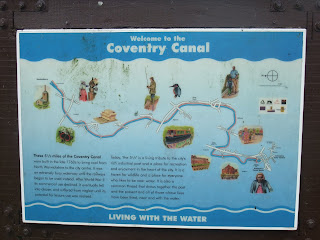
The Boat Inn was the hub of the community in Grange Road. Uncle H's family apparently used to work on the barges. The Coventry Canal runs across Grange Road, just the other side of the Tom Mann house. To get over the canal you have to use a terrifyingly steep hump-backed bridge - quite a challenge for a horse-drawn vehicle such as a bread delivery van, especially in icy weather.
Hawkesbury Junction is a major intersection on the national canal system, and is situated just off Grange Road.
The Boat Inn is no more. It practically broke Uncle H's heart when some faceless bureaucrat decided to run the M6 right through Grange Road, at the exact spot where the Boat stood.
Now you see it.

Now you don't.

The rumble of traffic is never-ending, 24 hours a day.
So much for progress. So much for improving the lot of the working people.
The thing is - this has become commonplace throughout Britain. Georgian and Victorian pubs demolished or redeveloped as little flats. Nowhere for people to gather, mingle, chat and form friendships. Lives blighted by traffic, and the noise of traffic.
21st Century people for the most part sit isolated in their little comfort zones in front of their home TVs and computer screens, drinking supermarket beer and wine. The new generations don't even miss what they never had. The young people go off to get ripped and fight in the impersonal city centre hangouts. The old people sit alone, and excluded, and remember fondly the good old days. Aunt O is 95 next month.




.
Thomas Mann, Nobel Prize laureate and author of Buddenbrooks, The Magic Mountain and Death In Venice, as well as numerous other works, was born in Germany in 1875.
"In 1930 Mann gave a public address in Berlin titled "An Appeal to Reason", in which he strongly denounced National Socialism and encouraged resistance by the working class. This was followed by numerous essays and lectures in which he attacked the Nazis. At the same time, he expressed increasing sympathy for socialist ideas." - Wikipedia
According to Thomas Mann,
No man remains quite what he was when he recognizes himself.
A writer is somebody for whom writing is more difficult than it is for other people.
War is a cowardly escape from the problems of peace.
I mention these things in passing.
Tom Mann, on the other hand, was born 19 years earlier, on 15th April 1856 in Coventry, and lived in a cottage in Grange Road, just a few yards within the city boundary. He was the son of a clerk who worked at a local coal mine.

"He attended school from the ages of six to nine, then began work doing odd jobs on the colliery farm. A year later he became a trapper, a labour-intensive job that involved clearing blockages from the narrow airways in the mining shafts. In 1870, the colliery was forced to close and the family moved to Birmingham. Mann soon found work as an engineering apprentice. He attended public meetings addressed by Annie Besant and John Bright, and this began his political awareness. He completed his apprenticeship in 1877 and moved to London. However, he was unable to find work as an engineer and took a series of unskilled jobs.
In 1879, Mann found work in an engineering shop. Here he was introduced to socialism by the foreman, and decided to improve his own education. His reading included the works of William Morris, Henry George and John Ruskin.
In 1881 he joined the Amalgamated Society of Engineers, and took part in his first strike. In 1884, he joined the Social Democratic Federation (SDF) in Battersea. Here he met John Burns and Henry Hyde Champion, who encouraged him to publish a pamphlet calling for the working day to be limited to eight hours. Mann formed an organisation, the Eight Hour League, which successfully pressured the Trades Union Congress to adopt the eight-hour day as a key goal.
Activist and leader
After reading the Communist Manifesto in 1886, Mann became a communist. He now believed the main purpose of the labour movement should be to overthrow capitalism, rather than just to ameliorate the condition of workers under capitalism. He moved to Newcastle in 1887 and organised the SDF in the north of England. He managed Keir Hardie's electoral campaign in Lanark before returning to London in 1888, where he worked in support of the Bryant and May match factory strike. With Burns and Champion, he began producing a journal, the Labour Elector, in 1888.
Along with Burns and Ben Tillett, Mann was one of the leading figures in the London Dock Strike in 1889. He was responsible for organising relief for the strikers and their families. With the support of other unions and various organisations, the strike was successful.
Following the strike, Mann was elected President of the newly-formed Dock, Wharf, Riverside and General Labourers' Union, with Tillett as General Secretary. Tillett and Mann wrote a pamphlet called New Unionism, which advanced the utopian ideal of a co-operative commonwealth.
Mann was also elected to the London Trades and Labour Council and as secretary of the National Reform Union, and was a member of the Royal Commission on Labour from 1891 to 1893. In 1894, he was a founding member of the Independent Labour Party and became the party Secretary in 1894.
He helped create the International Transport Workers' Federation, and was its first President. He was deported from a number of European countries for organising trade unions.
He advocated the co-operative model of economic organisation, but resisted alliance between the ILP and other socialist organisations in Britain, like the Fabians. In 1895, the Fabian Beatrice Webb criticised Mann's absolutism and described his goal derogatorily as, "a body of men all professing exactly the same creed and all working in exact uniformity to exactly the same end". Philip Snowden, a member of the ILP, liked Mann but was critical of his inability to stay with any one party or organisation for more than a few years.
....................................................
The contest for the leadership of the Labour Party is currently meandering on, boring everyone to death, and provoking anger in those who see the candidates as absolute prats of the first order, in one way or another. With the exception of the sole woman candidate the candidates are all members of the faction known as New Labour, which successfully infiltrated and overthrew the party of Mann, Hardie and MacDonald during its inception - under the leadership of Blair, Brown and Mandelson - in the 1990s.
..................................................
The Coalition and their media allies appear to have been highly successful in brainwashing working class as well as middle class people into believing that slashing public services ("cutbacks") is desireable and necessary, because of "the debt". As if they have any idea what the real effects of the cuts will be on jobs, the economy in general, and the public services themselves.
It was good to hear Brother J, at least, in a state of absolute rage this morning, talking about the Coalition, their economic illiteracy, and their determination to outdo even Thatcher and her voodoo economics.
.............................................................
In 1901, Mann emigrated to Australia to see if that country's broader electoral franchise would allow more "drastic modification of capitalism". Settling in Melbourne he was active in Australian trade unions and became an organiser for the Australian Labor Party. However, he grew disillusioned with the party, believing it was being corrupted by the nature of government and concerned only with winning elections. He felt that the federal Labour MPs were unable and unwilling to change society, and their prominence within the movement was stifling and over-shadowing organised labour. He resigned from the ALP and founded the Victorian Socialist Party.
Returning to Britain in 1910, Mann wrote The Way to Win, a pamphlet that argued that socialism could be achieved only through trade unionism and co-operation and that parliamentary democracy was inherently corrupt. He founded the Industrial Syndicalist Education League, and worked as an organiser for Ben Tillett. He led the 1911 Liverpool General Transport Strike. In 1912 he was convicted under the Incitement to Mutiny Act 1797 of publishing an article in The Syndicalist, as an 'Open Letter to British Soldiers', urging them to refuse to shoot at strikers (later reprinted as a leaflet, Don't Shoot); his prison sentence was quashed after public pressure. He was opposed to Britain's involvement in the first World War on socialist and religious grounds and addressed pacifist rallies. In 1917, he joined the successor to the Social Democratic Federation, the British Socialist Party, which had affiliated to the Labour Party the previous year.
Tom Mann continued to actively champion socialism, communism and co-operation until his death in 1941. He published further pamphlets and regularly addressed public meetings in Britain and abroad, and he was arrested for sedition on several more occasions. He continued to be a popular figure in the labour movement, attracting large audiences to rallies and benefits. During the Spanish Civil War he wanted to fight on the Republican side, but was by that time far too old. A unit of the International Brigade, the Tom Mann Centuria, was named in his honour.
Tom Mann died on 13 March 1941. - Wikipedia
Tom Mann's Memoirs -
http://www.amazon.co.uk/Tom-Manns-Memoirs-Socialist-Classics/dp/085124758X/ref=sr_1_1?ie=UTF8&s=books&qid=1256115311&sr=1-1
I had only a very short time at school as a boy, less than three years all told. When I was nine years old I was considered old enough to start work. My father was a clerk at the Victoria Colliery; so it was counted fitting that I should make a start as a boy on the colliery farm. A year as a kiddie doing odd jobs in the fields, bird-scaring, leading the horse at the plough, stone-picking, harvesting, and so on, and I was to tackle a job down the mine.
My job was to make and keep in order small roads or courses to convey the air to the respective workings in the mines. The air courses were only three feet high and wide, and my work was to take away the mullock, coal, or dirt that the man would require taken from him as he was worked away at 'heading' a new road, or repairing an existing one.
For this removal there were boxes known down the mine as dans, about two feet six inches long and eighteen inches wide and of a similar depth, with an iron ring strongly fixed at each end. A piece of stout material was fitted on the boy around the waist. To this there was a chain attached, and the boy would hook the chain to the box, and crawling on all fours, the chain between his legs, would drag the box along and take it to the gob where it would be emptied.
Although I was connected with the Anglican Church, the Bible class I attended and liked so much was conducted by Edmund Laundy of the Society of Friends. Mr. Laundy was a public accountant, a precise speaker, a splendid teacher. He taught me much, and helped me in the matter of correct pronunciation, clear articulation, and insistence upon knowing the root origin of words, with a proper care in the use in the right words to convey ideas.
See more quotes at http://www.spartacus.schoolnet.co.uk/REmann.htm -
He (Tom Mann) combined the qualities of whirlwind and volcano. His was the genius of sheer energy. His tremendous capacity for the work he enjoys the most became a mighty factor in the supreme crisis of the Dock Strike. For Tom Mann I entertain a deep respect as a comrade which has not been destroyed by the intellectual vagrancy into which his energy led him in after years. I remember old Henry Hyndman saying that Tom's intellect was a tidal one, swayed by changes in the moon, and capable of the same ebb and flow. Still, he has been a consistent class-conscious fighter for the various causes to which he has adhered; sound at heart, self-sacrificing and courageous, he has never deserted the flag, even if he has sometimes attempted to plant it in impossible places. - Ben TillettNo white flag for Tom Mann.
......................................................................


Aunt O still lives in Grange Road, a hundred yards or so down from Tom Mann's house. She's lived in and around Grange Road all her life. Some of my earliest and happiest memories are of the Christmas gatherings that took place in her and Uncle H's little terraced house - their home during the 50's and 60's - which was just a few doors down from Tom's house. It still amazes me to think how many people used to squeeze into such a narrow house for Christmas dinner and Christmas parties.

The Boat Inn was the hub of the community in Grange Road. Uncle H's family apparently used to work on the barges. The Coventry Canal runs across Grange Road, just the other side of the Tom Mann house. To get over the canal you have to use a terrifyingly steep hump-backed bridge - quite a challenge for a horse-drawn vehicle such as a bread delivery van, especially in icy weather.
Hawkesbury Junction is a major intersection on the national canal system, and is situated just off Grange Road.
The Boat Inn is no more. It practically broke Uncle H's heart when some faceless bureaucrat decided to run the M6 right through Grange Road, at the exact spot where the Boat stood.
Now you see it.

Now you don't.

The rumble of traffic is never-ending, 24 hours a day.
So much for progress. So much for improving the lot of the working people.
The thing is - this has become commonplace throughout Britain. Georgian and Victorian pubs demolished or redeveloped as little flats. Nowhere for people to gather, mingle, chat and form friendships. Lives blighted by traffic, and the noise of traffic.
21st Century people for the most part sit isolated in their little comfort zones in front of their home TVs and computer screens, drinking supermarket beer and wine. The new generations don't even miss what they never had. The young people go off to get ripped and fight in the impersonal city centre hangouts. The old people sit alone, and excluded, and remember fondly the good old days. Aunt O is 95 next month.


.
Wednesday, March 24, 2010
Layer 272 . . . Community, Solidarity, Negativity, Bees, Mirasmus, Powerlessness, Social Justice and Freedom
.
One of the key lessons that people learn as they become older and wiser is that nothing of real significance or of lasting benefit is achieved by individuals acting alone. Everyone depends on other people for growth, sustenance, support and collaboration. We all have our parts to play, and even those who achieve the most are usually standing on the shoulders of some giants who have gone before them.
Even Barack Obama, an outstanding individual, became as powerful and well known as he is thanks to hundreds of thousands, and perhaps millions, of 'ordinary' people taking part in canvassing, fundraising and voter registration. He owes them all - big time. Very unlike a lot of previous presidents who relied on the big party machines to raise funds from rich individuals and corporations and then to adopt them as their figurehead. Through doing it the hard way Obama is both less endebted to the fat cats and the party machines, and more endebted to we, the people. Even those of us who just stood by and cheered from the sidelines, or from across the pond. It's the cause and the collective that's important - not the leader or the figurehead. Though you'd never convince the likes of Thatcher or Blair that this is the case, it's been well understood by others like Martin Luther King and Nelson Mandela.
A really good example of a successful collective of individuals is a hive of honey bees, where the 'queen' is merely an egg layer, and it's clearly the efforts of the workers, the maintenance crew and the nurses that determine whether her egg laying is going to have any consequence.
The latest of Richard Hammond's fascinating series of documentaries on the unseen universe (Invisible Worlds) this week showed us - using x-rays, infra-red and ultra-violet - things that a normal human eye could never see. Such as members of a hive of bees that have body temperatures far higher than other members of the community, and who then use this particular faculty or gift to maintain the eggs and the pupae at the optimum temperature for development into adulthood.
It might be very interesting to use this technology to focus on human beings to see whether we too have members of our communities who are physically able to spread warmth, comfort and wellbeing. It's clearly the case that we have people who psychologically and spiritually either cool things down or spread some warmth. Maybe some people can do both, depending on circumstances. Some people can also freeze or enflame.
One reviewer of a book called 'How Full Is Your Bucket?' by Rath & Clifton said this: "They paint a compelling picture of the good things that happen when people are encouraged, recognised, and praised regularly, as well as the emotional, mental and sometimes even physical devastation that can occur in the absence of such positive encounters."
Which is all very well, but in itself such a positive approach to life is not going create a better world. Big fish like Berlusconi, Bush and Blair - and even minnows like Blears and Byers - have had more than a fair share of encouragement, recognition and praise - and look where that's taken us to.
................................................
Negativity Kills
'Negativity Kills' is the title of the first chapter in the Rath & Clifton book, and it's something to think about for all the New Labourites who supported the government's efforts to 'drive up standards' through slagging off the professions, telling them they're not good enough and they can't be trusted, and setting them production targets that could only be achieved through neglecting the real needs of the actual clients of doctors, social workers, teachers, etc.
Rath & Clifton describe a condition they call 'mirasmus' which they say is the end result of constant negativity and lack of positive input. It's a state of complete hopelessness and a feeling of giving up when you see the world as a complete crock of shit, and can't see any way to live a better life or to feel any faith or hope in the future, let alone love. People who have been psychologically deprived and have received only negative inputs eventually come to feel that even survival is pointless, and cannot even raise the energy to get angry about the state of themselves or of the world. Remember what Maya Angelou said about anger? "If you're not angry . . . you're either a stone or you're too sick to be angry."
Britain is now full of people who wander around in a state of mirasmus. They live in a state of isolation and despair. They radiate the negativity they've had inflicted on them. They have no faith in politics, or in the likelihood of being able to get a decent job, build a better life, and stay out of debt. They have no hope for the future. They hate their lives, their work, and the state of the world in general. They neither care about themselves or other people. They can neither love nor hate, nor get angry. They have no passion for anything.
http://www.gary-tomlinson.com/media/Book_Report_-_How_Full_is_Your_Bucket.pdf
....................................................
In the Guardian today there's a 'comment' column by Amartya Sen, the Nobel prize-winning economist who teaches philosophy and economics at Harvard.
He's making the point that "freedom" as a concept is meaningless if people don't have any real ability to enjoy a life in which they seem to be politically and socially free - i.e. are not able to live lifestyles that most people see as desireable and ensure at least a basic level of wellbeing.
If people feel hopeless and have no faith in the possibility of a better life then they can't possibly feel they have either justice or freedom in their lives.
http://www.guardian.co.uk/commentisfree/libertycentral/2010/mar/23/social-justice-philosophy-freedom
...................................................
Iconoclasts
I first came across this series on Sky Arts last week, in which the programmes are based on a meeting and a dialogue between an older black woman and a younger black person of either gender. Last week (remember? Layer 266) it was Maya Angelou and Dave Chappelle.
Alecia Keys and Ruby Dee both grew up, 60 years apart, in Hell's Kitchen, Harlem.
http://en.wikipedia.org/wiki/Alicia_Keys
http://en.wikipedia.org/wiki/Ruby_Dee
Both of these amazing women are political and human rights activists, as well as artists, performers, philanthropists, educationalists, and an inspiration to their communities.
Bob Dylan said of Alicia Keys, “There’s nothing about that girl I don’t like” - and when His Bobness says someone's just about perfect then you really need to take note. On the opening track of his album Modern Times he sings “I was thinking ’bout Alicia Keys, I couldn’t keep from crying/ While she was born in Hell’s Kitchen, I was living down the line / I'm wondering where in the world Alicia Keys could be / I been looking for her even clean through Tennessee.” How many people does Dylan ever bother to namecheck on his records?
Alicia Keys is a songwriter, musician, actor, poet and author, and she's intelligent, beautiful, creative, thoughtful, generous, idealistic, insightful, and a real role model for all young people. Ditto Ruby Dee, who's still going strong at the age of 86.
http://www.slate.com/id/2147487/
For the record - Alicia had a role in a film called The Secret Life of Bees.
http://en.wikipedia.org/wiki/The_Secret_Life_of_Bees_%28film%29
.................................................................
Radio Culture
There was an edition of Marcus Brigstocke's "I've Never Seen Star Wars" on R4 last night in which he asked Jenny Eclaire to watch "Apocalypse Now" - since she's always avoided seeing it. Her verdict was that it was very good. She then revealed that she's never seen Star Wars either - the first person they've ever had on the programme who's never actually seen it!
http://www.bbc.co.uk/programmes/b00hcr67
Jenny also had to eat jellied eels!
"He's never asked me to marry him. 28 years of sharing the same bed. He has the bed on Mondays, Wednesdays, Fridays . . ."
.
One of the key lessons that people learn as they become older and wiser is that nothing of real significance or of lasting benefit is achieved by individuals acting alone. Everyone depends on other people for growth, sustenance, support and collaboration. We all have our parts to play, and even those who achieve the most are usually standing on the shoulders of some giants who have gone before them.
Even Barack Obama, an outstanding individual, became as powerful and well known as he is thanks to hundreds of thousands, and perhaps millions, of 'ordinary' people taking part in canvassing, fundraising and voter registration. He owes them all - big time. Very unlike a lot of previous presidents who relied on the big party machines to raise funds from rich individuals and corporations and then to adopt them as their figurehead. Through doing it the hard way Obama is both less endebted to the fat cats and the party machines, and more endebted to we, the people. Even those of us who just stood by and cheered from the sidelines, or from across the pond. It's the cause and the collective that's important - not the leader or the figurehead. Though you'd never convince the likes of Thatcher or Blair that this is the case, it's been well understood by others like Martin Luther King and Nelson Mandela.
A really good example of a successful collective of individuals is a hive of honey bees, where the 'queen' is merely an egg layer, and it's clearly the efforts of the workers, the maintenance crew and the nurses that determine whether her egg laying is going to have any consequence.
The latest of Richard Hammond's fascinating series of documentaries on the unseen universe (Invisible Worlds) this week showed us - using x-rays, infra-red and ultra-violet - things that a normal human eye could never see. Such as members of a hive of bees that have body temperatures far higher than other members of the community, and who then use this particular faculty or gift to maintain the eggs and the pupae at the optimum temperature for development into adulthood.
It might be very interesting to use this technology to focus on human beings to see whether we too have members of our communities who are physically able to spread warmth, comfort and wellbeing. It's clearly the case that we have people who psychologically and spiritually either cool things down or spread some warmth. Maybe some people can do both, depending on circumstances. Some people can also freeze or enflame.
One reviewer of a book called 'How Full Is Your Bucket?' by Rath & Clifton said this: "They paint a compelling picture of the good things that happen when people are encouraged, recognised, and praised regularly, as well as the emotional, mental and sometimes even physical devastation that can occur in the absence of such positive encounters."
Which is all very well, but in itself such a positive approach to life is not going create a better world. Big fish like Berlusconi, Bush and Blair - and even minnows like Blears and Byers - have had more than a fair share of encouragement, recognition and praise - and look where that's taken us to.
................................................
Negativity Kills
'Negativity Kills' is the title of the first chapter in the Rath & Clifton book, and it's something to think about for all the New Labourites who supported the government's efforts to 'drive up standards' through slagging off the professions, telling them they're not good enough and they can't be trusted, and setting them production targets that could only be achieved through neglecting the real needs of the actual clients of doctors, social workers, teachers, etc.
Rath & Clifton describe a condition they call 'mirasmus' which they say is the end result of constant negativity and lack of positive input. It's a state of complete hopelessness and a feeling of giving up when you see the world as a complete crock of shit, and can't see any way to live a better life or to feel any faith or hope in the future, let alone love. People who have been psychologically deprived and have received only negative inputs eventually come to feel that even survival is pointless, and cannot even raise the energy to get angry about the state of themselves or of the world. Remember what Maya Angelou said about anger? "If you're not angry . . . you're either a stone or you're too sick to be angry."
Britain is now full of people who wander around in a state of mirasmus. They live in a state of isolation and despair. They radiate the negativity they've had inflicted on them. They have no faith in politics, or in the likelihood of being able to get a decent job, build a better life, and stay out of debt. They have no hope for the future. They hate their lives, their work, and the state of the world in general. They neither care about themselves or other people. They can neither love nor hate, nor get angry. They have no passion for anything.
http://www.gary-tomlinson.com/media/Book_Report_-_How_Full_is_Your_Bucket.pdf
....................................................
In the Guardian today there's a 'comment' column by Amartya Sen, the Nobel prize-winning economist who teaches philosophy and economics at Harvard.
He's making the point that "freedom" as a concept is meaningless if people don't have any real ability to enjoy a life in which they seem to be politically and socially free - i.e. are not able to live lifestyles that most people see as desireable and ensure at least a basic level of wellbeing.
If people feel hopeless and have no faith in the possibility of a better life then they can't possibly feel they have either justice or freedom in their lives.
Powerlessness in actual lives is the hurdle that justice must clear
The state must ensure that individual freedoms not only exist, but that everyone has the ability to experience them
http://www.guardian.co.uk/commentisfree/libertycentral/2010/mar/23/social-justice-philosophy-freedom
The question that immediately arises is how to understand the richness and poverty of human lives.
Even if chronically deprived persons – the hopelessly poor, or long-term unemployed – learn to come to terms with and accept cheerfully their deprived lifestyles, that cultivated cheerfulness will not eliminate the real deprivation of freedom from which they will continue to suffer.
When, however, the focus is on issues of economic and social inequality in the lives that different people lead, the relevant aspects of freedom can be captured better by a fuller assessment of what is called, in the new literature, "capabilities", which reflect the actual opportunities of a person. It is easily checked that means such as incomes and other resources, while valuable in the pursuit of capabilities, are not themselves indicators of the capabilities and freedoms that people actually have. The real opportunities that different persons enjoy are very substantially influenced by variations of individual circumstances (eg age, disability, talents, gender, maternity) and also by disparities in the natural and the social environment (eg epidemiological conditions, pollution, prevalence of crime). An exclusive concentration on inequalities in income distribution cannot be adequate for an understanding of economic inequality.
This is routinely missed in poverty relief programmes that concentrate only on the lowness of incomes.
To say that a person is powerless in reversing the kind of neglect that they have been experiencing can also be expressed in the language of capability: they are not capable of reversing the neglect from which they suffer. And yet there is some evocative strength and rhetorical force in the language of power, particularly in dealing with powerlessness, that the word capability, which is really a term of art, cannot really match. Analysing power and powerlessness can help to generate a better understanding of the divided world in which we live. Mary Wollstonecraft's wrath and bitter irony about the subjugation of women complemented her cool reasoning against gender hierarchy in her 1792 classic, A Vindication of the Rights of Woman.
Or take Steve Biko's remarks on "powerlessness" in the apartheid-based South Africa in the 1970s. "Powerlessness breeds," Biko said, "a race of beggars who smile at the enemy and swear at him in the sanctity of his toilet; who shout 'Boss' willingly during the day and call the white man a dog in their buses as they go home." If capability failure of any kind is a matter of concern, those related to people's inability to act freely or speak openly because of the power of others have special urgency. This is an important concern in the advancement of freedom and capability, since societies involve conflicts as well as togetherness and mutual support. The pursuit of justice in enhancing freedoms and capabilities in peoples' lives has to be alive to both.
...................................................
Iconoclasts
I first came across this series on Sky Arts last week, in which the programmes are based on a meeting and a dialogue between an older black woman and a younger black person of either gender. Last week (remember? Layer 266) it was Maya Angelou and Dave Chappelle.
Alecia Keys and Ruby Dee both grew up, 60 years apart, in Hell's Kitchen, Harlem.
http://en.wikipedia.org/wiki/Alicia_Keys
http://en.wikipedia.org/wiki/Ruby_Dee
Both of these amazing women are political and human rights activists, as well as artists, performers, philanthropists, educationalists, and an inspiration to their communities.
Bob Dylan said of Alicia Keys, “There’s nothing about that girl I don’t like” - and when His Bobness says someone's just about perfect then you really need to take note. On the opening track of his album Modern Times he sings “I was thinking ’bout Alicia Keys, I couldn’t keep from crying/ While she was born in Hell’s Kitchen, I was living down the line / I'm wondering where in the world Alicia Keys could be / I been looking for her even clean through Tennessee.” How many people does Dylan ever bother to namecheck on his records?
Alicia Keys is a songwriter, musician, actor, poet and author, and she's intelligent, beautiful, creative, thoughtful, generous, idealistic, insightful, and a real role model for all young people. Ditto Ruby Dee, who's still going strong at the age of 86.
http://www.slate.com/id/2147487/
For the record - Alicia had a role in a film called The Secret Life of Bees.
http://en.wikipedia.org/wiki/The_Secret_Life_of_Bees_%28film%29
.................................................................
Radio Culture
There was an edition of Marcus Brigstocke's "I've Never Seen Star Wars" on R4 last night in which he asked Jenny Eclaire to watch "Apocalypse Now" - since she's always avoided seeing it. Her verdict was that it was very good. She then revealed that she's never seen Star Wars either - the first person they've ever had on the programme who's never actually seen it!
http://www.bbc.co.uk/programmes/b00hcr67
Jenny also had to eat jellied eels!
"He's never asked me to marry him. 28 years of sharing the same bed. He has the bed on Mondays, Wednesdays, Fridays . . ."
.
Subscribe to:
Posts (Atom)